You notice a smell that is distinctly fishy. It seems worse after sex, or sometimes after your period. The discharge looks different from usual: thinner, greyer, more watery. There is not much itching. You are not sure what this is or whether it needs treatment.
What you are describing is almost certainly bacterial vaginosis, usually called BV. It is a common cause of vaginal symptoms in women of reproductive age (Koumans EH et al., Sex Transm Dis 2007; PMID 17621244). It is not an STI in the traditional sense. It is not caused by poor hygiene. And it responds well to treatment when it is properly diagnosed.
This post covers:
- What BV is and why the vaginal bacteria shift in the first place
- How to recognise it, and how it differs from a yeast infection
- How a doctor diagnoses it
- Treatment options available in India
- Why it keeps coming back in some women
- What you need to know if you are pregnant
What Is Bacterial Vaginosis?
The vagina is home to a community of bacteria, dominated under healthy conditions by species of Lactobacillus. These bacteria produce lactic acid, which keeps the vaginal environment slightly acidic (pH below 4.5). That acidity is protective. It keeps other microorganisms from overgrowing.
BV happens when this balance shifts. Lactobacillus numbers fall, and a range of other bacteria, including Gardnerella vaginalis and various anaerobic species, multiply in their place. This is not the arrival of a new, foreign organism. It is a change in the proportion of bacteria that were already there.
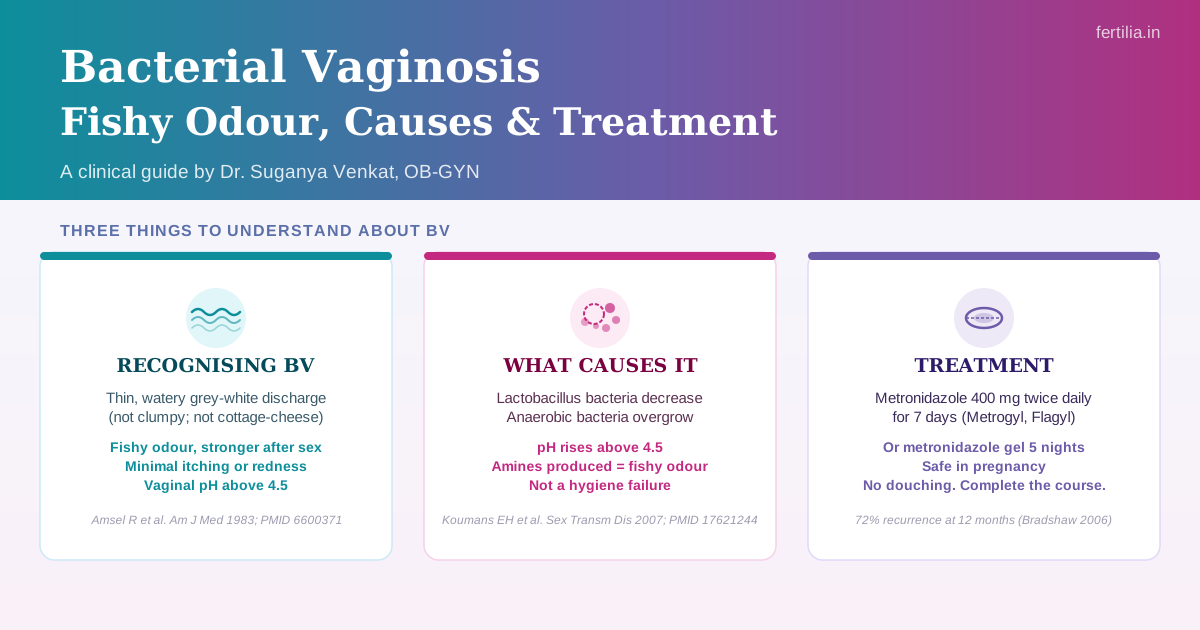
The overgrowth of anaerobic bacteria produces amines, chemical compounds with a characteristic fishy odour. Semen is alkaline, and when the vaginal pH rises further after sex, the amines volatilise and the smell becomes more noticeable. This is one of the most consistent features of BV and something many women describe: the odour that is more apparent after sex.
BV does not usually cause the intense itch or the thick white discharge that a yeast infection causes. Those are different conditions with different causes, and distinguishing them matters because the treatments are completely different.
Symptoms of Bacterial Vaginosis
Not every woman with BV has obvious symptoms. Some women have the bacterial shift on a swab but feel nothing at all. When symptoms are present, they tend to include:
Discharge: Thin, watery, and either grey-white or off-white. Not clumpy or cottage-cheese in texture (that is the pattern for yeast). The consistency is often described as milk-like or watery rather than thick.
Odour: A distinctly fishy smell. It may be mild at rest but becomes noticeable after sex or sometimes after your period, when the vaginal pH temporarily rises. Many women notice this smell on underwear or on toilet paper and find it distressing.
Minimal itching: BV typically causes very little itching around the vaginal opening or vulva. If the itch is the primary complaint, particularly with redness and swelling, a yeast infection or a contact reaction is more likely.
No pain: BV does not usually cause pain during sex or during urination. If there is significant pelvic pain or deep pain with sex, that needs separate evaluation.
BV vs Yeast Infection: A Clear Comparison
These two conditions are frequently confused, partly because both cause abnormal discharge and both respond to different treatments. Getting the diagnosis right before treating is important, because antifungal treatment does not touch BV and metronidazole does not touch a yeast infection.
| Feature | Bacterial Vaginosis | Vaginal Yeast Infection |
|---|---|---|
| Discharge colour | Grey-white or off-white | White |
| Discharge texture | Thin, watery | Thick, clumpy, cottage-cheese |
| Odour | Fishy, often stronger after sex | Little to no odour (or mild yeasty smell) |
| Itching | Minimal | Significant, often intense |
| Redness/swelling | Usually absent | Common around the vulval opening |
| Vaginal pH | >4.5 | Normal (3.8-4.5) |
| Cause | Bacterial imbalance | Candida overgrowth |
| Treatment | Metronidazole or clindamycin | Antifungal (clotrimazole, fluconazole) |
If you are unsure which you have, the answer is always a swab. Self-treating the wrong condition delays the right treatment and can make things worse.
For a complete guide to identifying yeast infections, including treatment options in India, see our vaginal yeast infection guide.
How BV Is Diagnosed
BV is diagnosed clinically using criteria set out by Amsel and colleagues in 1983 (Amsel R et al., Am J Med 1983; PMID 6600371). A doctor looks for three of the following four features:
- A thin, homogeneous, grey-white discharge that coats the vaginal walls
- Vaginal pH greater than 4.5 (measured with a simple pH strip during examination)
- A positive whiff test (a fishy amine smell when a drop of 10% potassium hydroxide is added to vaginal discharge)
- Clue cells on microscopy (vaginal epithelial cells heavily coated with bacteria, visible under the microscope)
Three out of four confirms BV. Swab-based lab tests (such as the Nugent score, based on Gram-stain microscopy of a vaginal smear) are also available and are more objective.
This is why self-diagnosis, though tempting, often misses the mark. A fishy smell alone could also be trichomoniasis, a different infection entirely. The only way to know which it is and to get the right treatment is a proper clinical assessment with a swab.
You can read more about what different types of vaginal discharge mean in our vaginal discharge guide.
Treatment Options for BV
BV clears reliably with the right antibiotic. The two most commonly used options are metronidazole and clindamycin.
Metronidazole (most commonly used)
Oral: Metronidazole 400 mg taken twice daily for 7 days. This is the standard first-line treatment recommended by international guidelines and widely available in India under brand names such as Metrogyl, Flagyl, and Aldezol.
Vaginal gel: Metronidazole 0.75% vaginal gel, applied once daily for five nights. This delivers the medication directly to the site and is sometimes preferred when women want to avoid the side effects of oral tablets (nausea, a metallic taste, and avoidance of alcohol during the course).
Clindamycin
Vaginal cream: Clindamycin 2% cream, applied once daily for seven nights. Available in India under brand names including Dalacin V. An alternative when metronidazole is not tolerated or in specific clinical situations.
Points to note
Alcohol and metronidazole: Avoid alcohol entirely during a course of oral metronidazole and for at least 24 hours after the last dose. The combination causes a significant reaction (flushing, rapid heart rate, nausea, vomiting).
Partner treatment: Current evidence does not support routinely treating male sexual partners with BV. Unlike STIs, BV is not reliably passed from person to person in a single direction. However, if a woman has a female partner, simultaneous treatment of both is often recommended because the vaginal microbiome can transfer between partners.
Completing the course: Symptoms often improve in the first few days. Complete the full course even if you feel better. Stopping early is one of the factors linked to recurrence.
If you have been getting BV repeatedly and are not sure why, or if you are pregnant and have been told you have BV, that is worth a proper conversation. You can reach Dr. Suganya directly on WhatsApp for an online consultation: chat on WhatsApp.
Why Does BV Keep Coming Back?
Recurrence is one of the most frustrating aspects of BV. A 12-month follow-up study by Bradshaw and colleagues (Bradshaw CS et al., J Infect Dis 2006; PMID 16652274) followed women after a course of oral metronidazole and found that 58% had a recurrence of BV by 12 months. This is not a reflection of anything you are doing wrong.
Several factors drive recurrence:
Disruption of Lactobacillus recovery: After antibiotic treatment, the vaginal microbiome needs to re-establish a healthy balance. If a woman’s Lactobacillus does not re-colonise well after treatment, the anaerobic bacteria return. Why some women re-establish Lactobacillus easily and others do not is an active area of research.
Vaginal douching: Inserting water, scented intimate washes, Dettol, or any cleansing liquid into the vagina is one of the most reliable ways to disrupt the vaginal microbiome. The vagina cleans itself. Douching washes out Lactobacillus, raises the pH, and creates exactly the conditions BV needs to take hold. It is an extremely common practice in India, and one of the most actionable changes a woman with recurrent BV can make.
Hormonal shifts: Oestrogen levels influence Lactobacillus populations. This is one reason BV can flare around menstruation, or become more common just before menopause when oestrogen levels fall. Some women notice a pattern tied to their cycle.
Sexual activity: BV is more common in sexually active women, and semen’s alkaline pH temporarily raises vaginal pH after sex, which can encourage anaerobic overgrowth. This does not make BV an STI in the conventional sense, but it does explain the pattern some women notice.
Smoking: There is consistent evidence linking cigarette smoking to higher BV prevalence and recurrence. The mechanism is not fully established, but the association is robust.
For women with frequent recurrence
If BV recurs three or more times in a year, a gynaecologist can discuss extended treatment protocols. These may include metronidazole vaginal gel used twice weekly for four to six months as suppressive therapy, or combined oral and gel regimens. This is a discussion worth having rather than repeating the standard 7-day course indefinitely.
BV in Pregnancy: Why It Matters
Pregnant women with BV need treatment. This is one situation where BV carries a consequence beyond discomfort.
A large meta-analysis by Leitich and colleagues (Leitich H et al., Am J Obstet Gynecol 2003; PMID 12861153) found that BV in pregnancy is associated with a significantly elevated risk of preterm delivery. The proposed mechanism is that BV-associated bacteria can cause inflammation in the membranes around the baby (chorioamnionitis), weakening them and triggering early labour.
Treatment of BV in pregnancy is safe. Metronidazole (both oral and gel formulations) is considered appropriate for use in pregnancy, including in the first trimester, when the benefit of treating BV outweighs the risk. Your obstetrician will determine the regimen based on your stage of pregnancy and individual history.
If you are pregnant and your routine vaginal swab shows BV, do not delay treatment. A reassurance-framed message on the results letter should not put you off following up. Ask directly whether this needs a treatment course.
If you are pregnant and have had a previous preterm birth, BV screening and treatment take on additional importance. This is a topic to raise proactively with your doctor.
For more on signs of preterm labour and what to watch for in pregnancy, see our guide to preterm labour signs.
What Does Not Help
A few common practices are worth naming because they are very common in India and actively work against vaginal health:
Scented intimate washes and soaps: The vagina does not need cleansing products. Soaps, gels, and intimate washes (even ones marketed as “pH-balanced”) alter the vaginal environment. External genital washing with plain water is sufficient.
Douching: Already covered in the recurrence section, but worth repeating. Inserting any liquid into the vagina disrupts the microbiome and is a direct trigger for BV.
Switching to antifungal treatment without a diagnosis: Buying over-the-counter clotrimazole pessaries because you suspect an infection is common, but if the problem is BV rather than yeast, the antifungal does nothing. Antifungals do not touch bacteria. Without a proper diagnosis, you may spend weeks treating the wrong condition.
Treating a partner with the same antibiotics: Sharing metronidazole with a male partner as a precaution is not evidence-based and is not recommended.
Practical Steps
- If you notice a fishy odour with thin grey discharge, see a gynaecologist for a swab. Do not self-diagnose or self-treat.
- Complete any antibiotic course fully, even when symptoms improve.
- Avoid douching entirely. External washing with water is all that is needed.
- If BV is recurrent (three or more times in a year), ask your doctor about a suppressive maintenance protocol.
- If you are pregnant and test positive for BV, ask specifically whether you need a treatment course and start it promptly.
- If discharge is accompanied by pelvic pain, fever, or deep pain during sex, these are signs of a potentially different condition (pelvic inflammatory disease or PID). See a doctor promptly.
Frequently Asked Questions
Is bacterial vaginosis an STI? BV is not classified as a sexually transmitted infection in the traditional sense. It is not caused by a single organism transmitted from a partner. It is a change in the balance of bacteria that already live in the vagina. However, sexual activity is one of the factors associated with it, partly because semen temporarily alters vaginal pH. The treatment does not involve treating male partners routinely (unlike STIs such as chlamydia or trichomoniasis).
Can BV go away on its own without treatment? Some cases of BV do resolve without treatment, but there is no reliable way to predict which ones will. Because untreated BV in pregnancy is associated with preterm birth, and because BV can sometimes progress to more serious conditions such as pelvic inflammatory disease if bacteria ascend to the uterus, treatment is generally recommended whenever BV is confirmed. If symptoms are mild and you are not pregnant, discuss the decision with your gynaecologist.
How do I tell BV from a yeast infection? The two have clearly different profiles. BV: thin, watery, grey-white discharge; fishy odour that intensifies after sex; little itching. Yeast infection: thick, white, cottage-cheese discharge; strong itch and burning around the vaginal opening; little or no odour. Treatments are completely different, and a swab from your gynaecologist is the definitive way to confirm which one it is.
Why does my BV keep coming back even after treatment? Recurrence is very common with BV. In a 12-month follow-up study, 58% of women had a recurrence of BV after treatment (Bradshaw CS et al., J Infect Dis 2006; PMID 16652274). Separately, the factors commonly linked to recurrence are: the vaginal Lactobacillus population not recovering fully after antibiotics, douching, hormonal shifts around menstruation, and smoking. If you are having three or more episodes per year, speak to your doctor about a longer suppressive treatment protocol.
machli jaisi gandh discharge kyu aata hai? (Why does discharge smell like fish?) Machali jaisi gandh (fishy smell from discharge) is the classic sign of bacterial vaginosis. BV ke anaerobic bacteria (khaas bacteria) amine compounds banate hain, jo fishy smell dete hain. Sex ke baad ye smell aur zyada hoti hai, kyunki semen se vaginal pH temporarily badhta hai. Yeh ek diagnosable aur treatable condition hai. Apne gynaecologist se swab test karwaiye, aur douching ya internal wash bilkul mat kariye.
Is BV treatment safe in pregnancy? Yes. Metronidazole, the standard treatment for BV, is considered safe to use in pregnancy, including in the first trimester. Untreated BV in pregnancy is associated with a higher risk of preterm birth, so treatment is important. Your obstetrician will confirm the appropriate dose and regimen based on your individual situation.
Can I prevent BV from recurring? There is no guaranteed prevention, but several things reduce recurrence risk: avoiding all forms of vaginal douching or internal washing, stopping smoking if you smoke, completing antibiotic courses fully, and asking your doctor about a suppressive metronidazole gel protocol if BV keeps returning. Probiotics (specifically Lactobacillus rhamnosus and Lactobacillus reuteri) have been studied as adjuncts to antibiotic treatment, with some trials showing a modest reduction in recurrence, though evidence is still developing.
When to See a Doctor
See a gynaecologist if:
- You have a fishy odour from discharge, with or without a visible change in discharge
- You have had BV before and the same pattern is returning
- You are pregnant and your swab has come back positive for BV
- You have used the wrong treatment (antifungal for what turned out to be BV, or vice versa)
- BV is recurring more than twice in a year
Do not use any vaginal treatment without a proper swab-based diagnosis. The symptoms of BV, yeast infection, and trichomoniasis overlap enough that clinical examination and a swab are needed to be certain.
For a broader overview of different types of vaginal discharge and what each pattern tends to indicate, see our vaginal discharge guide.
If you are also dealing with recurrent UTIs alongside recurrent BV, you may find our recurrent UTI guide relevant, as some of the contributing factors (pH disruption, microbiome imbalance) overlap.
If you have questions about BV, whether you are trying to understand a recent diagnosis, dealing with a recurrence, or are pregnant and concerned, Dr. Suganya is available for an online consultation. You can start that conversation directly on WhatsApp: chat with Dr. Suganya.