You notice intense itching below, and a white, clumpy discharge on your underwear. The itch does not go away. There is no strong smell, but something is clearly off. You wonder whether it is something you ate, a hygiene issue, or an infection that needs medication.
What you are most likely experiencing is a vaginal yeast infection, medically called vulvovaginal candidiasis. It is one of the most common gynaecological conditions in women, entirely treatable, and nothing to be embarrassed about. About three in four women have at least one in their lifetime, and about half of those women have more than one episode (Foxman B et al, Clin Infect Dis 2000; 30(4):663-7).
This post covers:
- What a vaginal yeast infection is and why it develops
- The specific symptoms and how to recognise them
- What triggers it, including why antibiotics set it off so reliably
- Treatment options in India, including what is safe in pregnancy
- When to see a doctor, and what to do if infections keep coming back
What Is a Vaginal Yeast Infection?
Candida albicans is a yeast that lives in small amounts on the skin and in the vagina. Under normal conditions, it does not cause any problems. A healthy vagina maintains a slightly acidic environment, mainly through Lactobacillus bacteria that produce lactic acid. This keeps Candida in check.
A yeast infection develops when this balance is disrupted and Candida multiplies beyond its normal levels. The resulting overgrowth causes inflammation of the vaginal lining and vulval skin, producing the familiar cluster of symptoms.
A vaginal yeast infection is not a sexually transmitted infection. You do not need to have had sex to develop one. The organism is already present in the body; the infection is about conditions that allow it to overgrow. Women who are not sexually active, teenagers, and post-menopausal women all develop yeast infections through non-sexual triggers.
Symptoms
The symptoms of a vaginal yeast infection are fairly characteristic, which is why women who have had one before often recognise a second episode.
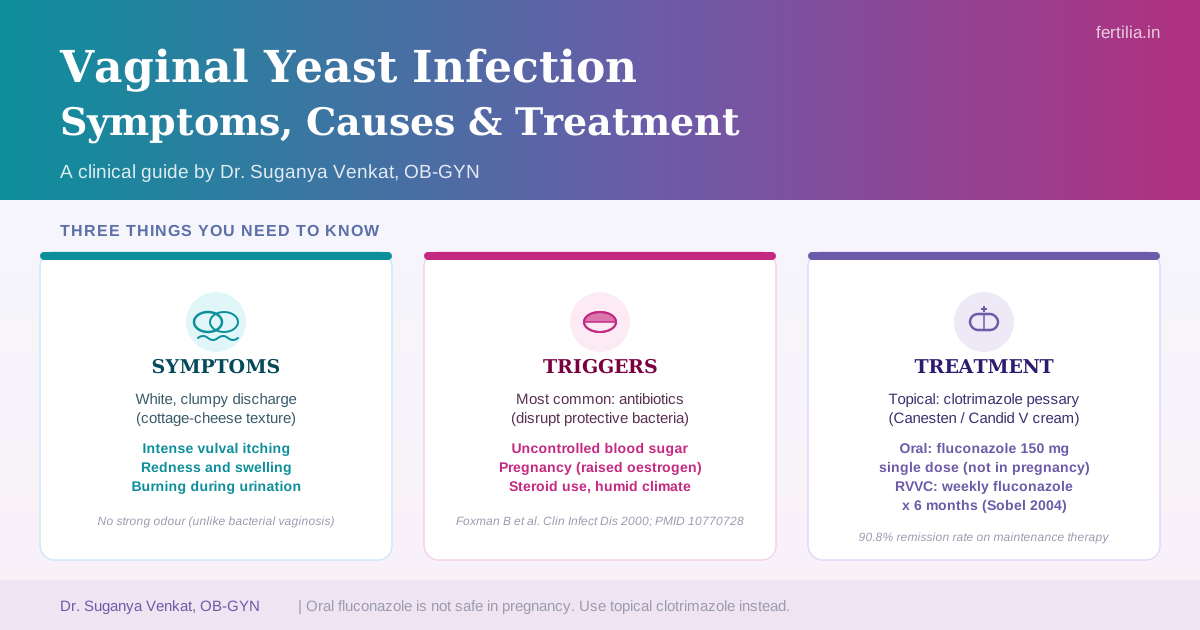
Discharge: White, thick, and clumpy, often described as looking like cottage cheese or curd. It usually has no strong odour, or a mild yeasty smell. This texture is quite different from the thin, watery, or foul-smelling discharge that signals bacterial vaginosis.
For more on this, read our guide on Bacterial Vaginosis. Itching: Often intense, affecting the vulva (the outer area) and sometimes the vaginal entrance. It may be worse at night or after a warm bath or shower.
Redness and swelling: The vulva may appear visibly red and feel tender or swollen to touch.
Burning during urination: This is external burning as urine passes over irritated vulval skin. It differs from the internal burning that comes with a urinary tract infection. If you are unsure which is happening, our post on UTI symptoms and treatment in women walks through the distinction clearly.
Pain during sex: Some women experience discomfort at penetration when a yeast infection is active.
Not every episode is severe. A milder infection may cause only slight itching with minimal discharge. A more severe one can cause enough swelling and skin irritation to make sitting uncomfortable. The range is wide.
What Triggers a Yeast Infection?
Several factors shift the vaginal environment in a way that allows Candida to grow.
Antibiotics
Antibiotics are the single most common trigger. Broad-spectrum antibiotics (amoxicillin, ampicillin, cephalosporins, fluoroquinolones) kill a wide range of bacteria, including the Lactobacillus species that keep the vaginal pH acidic. With that protective layer disrupted, yeast can grow without competition. Many women notice a yeast infection within a few days of finishing an antibiotic course.
If you consistently get a yeast infection after antibiotics, tell your prescribing doctor. Some doctors prescribe a single dose of fluconazole alongside the antibiotic as a preventive measure, though this is done on a case-by-case basis.
Uncontrolled Blood Sugar
Yeast grows well in a high-sugar environment. The vaginal cells of women with poorly controlled diabetes contain more glycogen, which Candida uses as fuel. Recurrent yeast infections without an obvious trigger are a reason to check fasting glucose and HbA1c. The link between diabetes and recurrent candidiasis is well established. For women with PCOS and insulin resistance, bringing the insulin picture under control is relevant here too.
Pregnancy
Rising oestrogen during pregnancy increases glycogen deposits in vaginal cells, creating a more hospitable environment for Candida. Yeast infections are more common during pregnancy, particularly in the second and third trimesters, and they often persist longer than outside of pregnancy. Treatment in pregnancy is different and covered in the section below.
Steroid Use
Oral corticosteroids (prednisolone, methylprednisolone) and long-term inhaled steroids for respiratory conditions can suppress local immune defences and allow yeast to gain a foothold. If you use inhaled steroids regularly and are getting recurrent infections, mentioning this to your doctor is useful context.
Hot, Humid Climate and Clothing
India’s climate is warm and humid for much of the year. Moisture in the vulval and vaginal area creates conditions where Candida can grow more easily. Tight synthetic clothing, nylon underwear, and shapewear worn for long periods trap heat and moisture. Switching to cotton underwear and changing out of wet gym clothes promptly are simple preventive steps that genuinely help.
A Note on the Sugar Myth
Eating sugary food does not directly trigger a vaginal yeast infection in women with normal blood sugar. The Candida inside the vagina does not respond to dietary sugar the way some content implies. What does matter is chronically elevated blood sugar over time, as in poorly managed diabetes. An occasional sweet is not a trigger; sustained hyperglycaemia is.
Getting the Diagnosis Right
Many women recognise the pattern and self-treat because the discharge and itch are so characteristic. This is reasonable for a woman who has been diagnosed with a yeast infection before and whose symptoms are identical to previous episodes.
For a first episode, seeing a doctor is worthwhile. A quick speculum examination and a vaginal swab confirm the diagnosis. Under the microscope with a potassium hydroxide (KOH) preparation, the budding yeast and hyphae are visible within minutes.
This matters because bacterial vaginosis and vulvovaginal candidiasis can both cause discharge and discomfort, but they look different under the microscope and respond to different treatments. Treating a bacterial infection with an antifungal does not work, and treating a yeast infection with antibiotics makes it worse. The overview of vaginal discharge types and what they mean is a useful starting point, but a swab gives you the actual answer.
For recurrent infections or cases that do not respond to standard treatment, a swab culture is sent to identify whether a different species is involved. Candida glabrata, for example, is naturally resistant to standard azole antifungals and needs a different treatment approach.
Treatment Options in India
Topical Antifungals
Topical clotrimazole is first-line treatment and is widely available in India without a prescription.
Clotrimazole pessary: Available as Canesten or Candid V.
- 100 mg pessary inserted at bedtime for 6 to 7 consecutive nights, or
- 500 mg pessary as a single bedtime dose
For the external vulval itch and redness, clotrimazole 1% cream (Canesten cream, Candid cream) applied to the vulva two or three times daily for 7 days alongside the pessary speeds symptom relief. The pessary treats the vaginal infection; the cream treats the external skin.
Other topical options include miconazole (Zole F, Funazole), which works similarly.
Oral Antifungal
Fluconazole 150 mg: A single oral tablet. Available in India as Zocon, Forcan, Fluka, or the generic. It works within 24 to 48 hours for most women. Many women find a single tablet more convenient than a 7-day course of pessaries, and cure rates are comparable.
Fluconazole is classified as a Schedule H drug in India, meaning it requires a prescription, but it is easily obtained with one.
If you have had more than three yeast infections this year, or if your symptoms are not clearing with the usual treatment, there is likely an underlying pattern driving the recurrence. That pattern is worth finding.
Chat with Dr. Suganya on WhatsApp
Treatment in Pregnancy
Oral fluconazole is not recommended during pregnancy. A large Danish cohort study (Mølgaard-Nielsen D et al, JAMA 2016; 315(1):58-67, PMID 26746458) found that oral fluconazole use in the first trimester was associated with increased risk of spontaneous miscarriage, and higher doses were linked to a small risk of fetal cardiac septal defects.
During pregnancy, topical clotrimazole pessary (100 mg nightly for 7 to 14 days) is the recommended option. It is minimally absorbed into the bloodstream and has a long safety record in all trimesters.
Any new or unusual vaginal discharge, itching, or burning during pregnancy warrants a check with your doctor before self-treating. If you are unsure whether your discharge during pregnancy is normal, our guide to white discharge in pregnancy explains what is expected and what to have checked.
Recurrent Vulvovaginal Candidiasis (RVVC)
RVVC is defined as four or more confirmed yeast infections in 12 months. It affects around 5 to 8% of women (Sobel JD, Lancet 2007; 369(9577):1961-71, PMID 17560449).
Treatment for RVVC involves two phases:
Induction: A 7 to 14-day course of topical clotrimazole, or fluconazole 150 mg taken every three days for three doses.
Maintenance: Fluconazole 150 mg taken once weekly for six months. A trial in the New England Journal of Medicine showed this regimen kept 90.8% of women symptom-free over six months, compared with 35.9% on placebo (Sobel JD et al, NEJM 2004; 351(9):876-83, PMID 15329425).
Before starting maintenance therapy, your doctor will check for contributing factors: fasting glucose, iron levels, and whether a non-albicans Candida species is involved. Maintaining remission is much easier once the underlying driver is addressed.
When to See a Doctor
See a doctor for your first episode, to get a confirmed diagnosis before starting treatment.
Also see a doctor if:
- You are pregnant or breastfeeding
- Symptoms are not improving within 3 to 5 days of starting treatment
- You are getting four or more infections per year
- You have diabetes, particularly if glycaemic control is not optimal
- Something about this episode feels different from previous ones (sores, severe swelling, unusual discharge colour)
Self-treatment with clotrimazole is reasonable for a woman with a confirmed history of yeast infections who recognises the same symptoms returning. But when something changes, or when infections come back repeatedly, a proper evaluation is more useful than another round of antifungal.
Vaginal Yeast Infection: Regional Names
In Hindi, this condition is commonly described as yoni mein kharish (vaginal itching) or referred to colloquially as a phungal infection (fungal infection). The medical term in Hindi is yoni candidiasis.
Tamil transliteration: regional terminology for vaginal candidiasis in Tamil is flagged for Dr. Suganya’s confirmation. Roman-only terms will be added once verified.
Frequently Asked Questions
Can I get a vaginal yeast infection without having sex?
Yes, entirely. A yeast infection is not sexually transmitted. Candida albicans is a normal component of the vaginal flora. It overgrows when the local environment changes: after antibiotics, during pregnancy, with poorly controlled blood sugar, or during steroid use. Many women who are not sexually active develop yeast infections through these non-sexual routes.
How is yeast infection discharge different from normal discharge?
Yeast infection discharge is white, thick, and clumpy, resembling cottage cheese or curd. Normal mid-cycle discharge is clear or white and has an egg-white or slightly watery consistency. The key distinguishing feature of yeast infection discharge is its texture: thick and particulate rather than smooth. Bacterial vaginosis discharge, by contrast, tends to be thin, greyish or off-white, and has a characteristic fishy odour. The vaginal discharge guide covers all discharge types with more detail if you are trying to work out which applies.
Is clotrimazole pessary safe to use during pregnancy?
Yes. Topical clotrimazole (pessary and cream) is considered safe across all trimesters. It is minimally absorbed systemically and has decades of safety data in pregnancy. What to avoid in pregnancy is oral fluconazole, due to concerns about miscarriage risk at standard doses and cardiac effects at higher doses. Always check with your doctor during pregnancy before starting any vaginal treatment, particularly if this is a first episode or the discharge looks unusual.
Why do I keep getting a yeast infection after every antibiotic course?
Broad-spectrum antibiotics reduce Lactobacillus bacteria, which are the key organisms keeping the vaginal environment acidic and inhospitable to yeast. Without them, Candida grows. If this happens consistently, speak to the doctor prescribing your antibiotics. A single prophylactic dose of fluconazole taken on the last day of an antibiotic course is a common approach for women with a reliable history of antibiotic-triggered infections. Lactobacillus-containing probiotics are sometimes used alongside antibiotics, though the evidence for their specific effect on yeast infection prevention is more modest.
How long does it take for a yeast infection to clear?
With oral fluconazole, many women notice relief within 24 to 48 hours and full resolution within 7 days. With topical treatment, the same timeline applies, though some women find the external itch settles within 2 to 3 days once the vulval cream is used alongside the pessary. If you are not seeing improvement after 3 to 5 days of treatment, see your doctor. The organism may not be responding to the azole class, or the diagnosis may need revisiting.
Can a male partner get a yeast infection from me?
It is possible, though uncommon. Male partners can develop penile candidiasis (balanitis), with redness, itching, and a rash at the tip or under the foreskin. If a partner develops symptoms, they can usually be treated with a topical antifungal cream. Avoiding sex during an active yeast infection speeds recovery and reduces the chance of passing Candida back and forth. If infections are recurring in both partners, both need to be evaluated.
Yeast infection ke kya lakshan hain? (Hindi: What are the symptoms of a yeast infection?)
Yeast infection ke main lakshan: vagina mein tej kharish (itching), mota safed discharge jo dahi ya paneer jaisa lagta hai, vulva mein jaljan (burning) aur laaliness, aur sex ke waqt dard. Is discharge mein zyada badboo nahi hoti, jo ise bacterial vaginosis se alag karti hai. Agar pehli baar ye symptoms aa rahe hain, ya agar 3 se 4 baar saal mein ho raha hai, doctor se milna best option hai.
Getting Support
Vaginal yeast infections are common, recognisable, and well-treatable. A single episode usually responds quickly to a short course of clotrimazole or a single fluconazole tablet. When infections keep coming back, finding the underlying reason, whether that is antibiotic use, blood sugar, or immune status, makes long-term management far more manageable.
For anything that does not clear as expected, or for recurrent infections, getting a proper evaluation is the most efficient path forward.
WhatsApp Dr. Suganya’s team to ask a question or book a consultation